How AI Dental Scan Tools Are Changing Patient Triage: What Forward-Thinking Dentists Need to Know
Patients are arriving with screenshots, symptom check results, and photos—because consumer health UX has trained them to expect direction before they pay for a visit. In dentistry, this is accelerating fast thanks to dental AI technology.
AI-assisted tools are not a replacement for diagnosis. But they are already changing how patients decide whether to book, how front desks triage, and what “prepared” looks like at check-in.
What “AI Dental Scan Tools” Usually Mean in Real Life
In public conversation, “AI dental scan” can refer to:
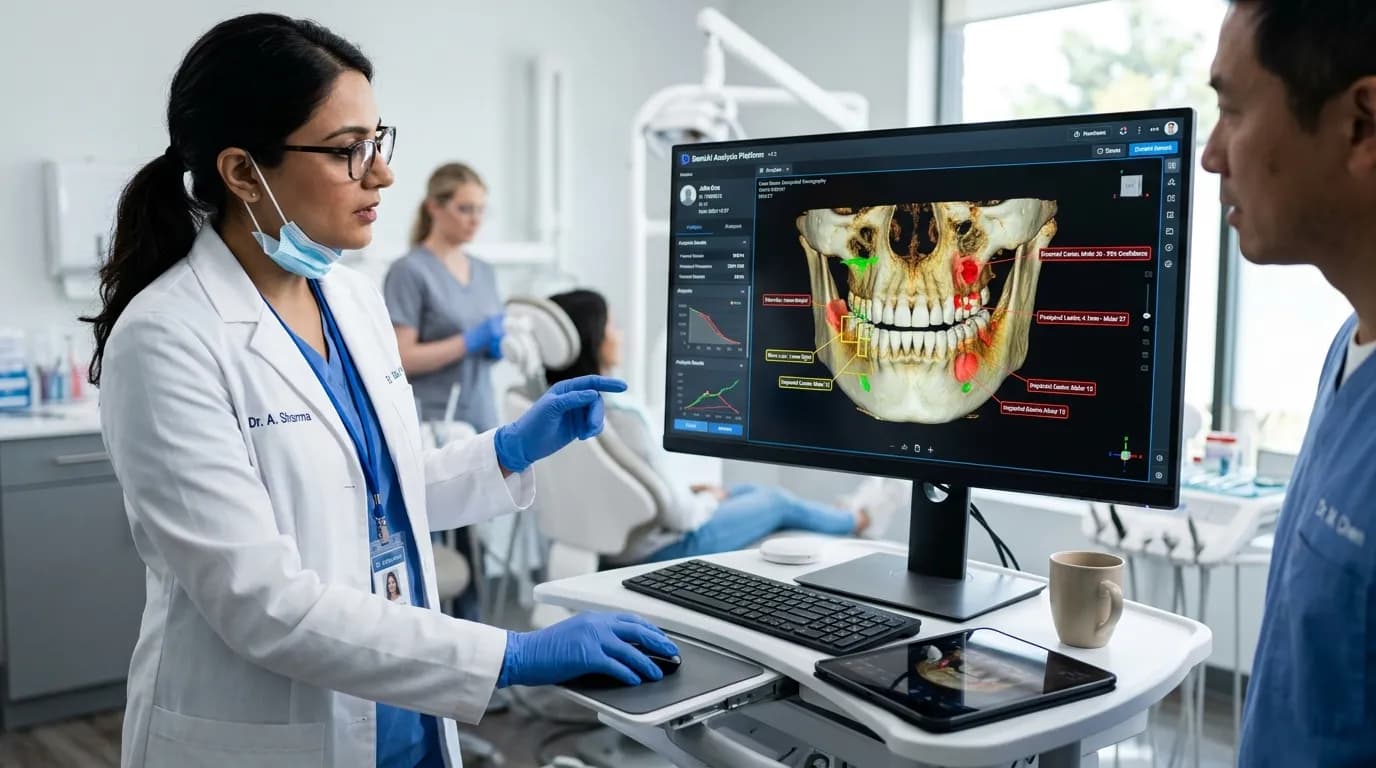
- Photo-based analysis tools that flag potential issues
- Symptom checkers that estimate likely categories of problems
- 3D-guided input tools that improve location accuracy
In practice, most consumer tools are “triage assist” rather than “diagnose.” That distinction matters for patient expectations and clinician trust.
Why This Matters: AI in Dentistry Is a Visibility and Workflow Issue
Forward-thinking practices are not adopting AI because it is trendy. They are responding to a funnel shift:
- Patients do pre-visit research and want faster confirmation.
- Front desks are expected to triage “urgency” more precisely.
- The first interaction often happens online (not your phone line).
Dental Technology + Triage: What Changes Operationally
1) Better triage inputs (if you structure them)
If a patient comes in saying “possible abscess,” you do not accept the conclusion, but you can use it to ask better questions faster:
- Swelling? Fever? Bad taste? Spontaneous nocturnal pain?
- Which tooth/area? Upper vs lower? Buccal vs lingual swelling?
2) More efficient virtual dental consultation workflows
Whether you call it teledentistry or avirtual dental consultation, remote triage is becoming an expectation. Practices that offer even a limited consult window can reduce after-hours calls and schedule better.
3) Patients arrive with a story—and you can improve it
The downside is misinformation. The upside is engagement. Your job is to swap “AI conclusion” for “clinical pathway.”
What Dentists Should Watch Out For
- Overconfidence bias: Patients may assume a tool “diagnosed” them.
- Image limitations: Lighting, angle, and tissue coverage skew results.
- Medico-legal clarity: Be explicit that triage is not a diagnosis.
Where DentalShelter Fits (Practical)
DentalShelter gives patients two key behaviors you want:
- A structured symptom summary (via 3D selection + questions)
- A local practice search (Nearby Practices) to convert intent into an appointment
Internal Linking Opportunities
- To understand patient-facing tooling: How an Online Dental Tool Can Help You Diagnose Tooth Problems Early
- To improve pre-appointment prep: How to Prepare for Your Dental Appointment Like a Pro
(Dentists)
DentalShelter's AI scan is already being used by patients before they visit. Make sure your practice appears when they search for nearby clinics.
Frequently Asked Questions
Is AI in dentistry accurate enough to diagnose?
Most consumer tools are best treated as triage support, not diagnosis. They can help patients communicate and decide urgency, but clinical assessment is still required.
How does teledentistry fit into a general practice?
Even a limited virtual dental consultation slot can help route urgent cases, reduce after-hours uncertainty, and improve scheduling accuracy.
What should front desks ask when patients mention an AI scan?
Ask about pain severity, swelling, fever, bad taste, trauma, and the exact location. The “AI result” is less important than the symptom pattern.
What is the practice advantage of showing up in Nearby Practices?
It captures patients at the moment they have intent—after they have already described symptoms and decided they likely need care.