Gum Disease Symptoms: How to Tell If Your Gums Are Trying to Warn You (And What to Do Next)
Most people treat gum problems like a minor annoyance—something to fix by brushing “a little harder” or switching mouthwash.
But your gums are not background scenery. They are living tissue and they bleed and swell for reasons. If you are noticinggum disease symptoms, your mouth is giving you an early warning system.
This guide will help you recognize the early signs of gum disease, understand the most common bleeding gums causes, decide when you need a dentist for bleeding gums, and learn the best next steps—including what you can do right now at home.
What Counts as Gum Disease?
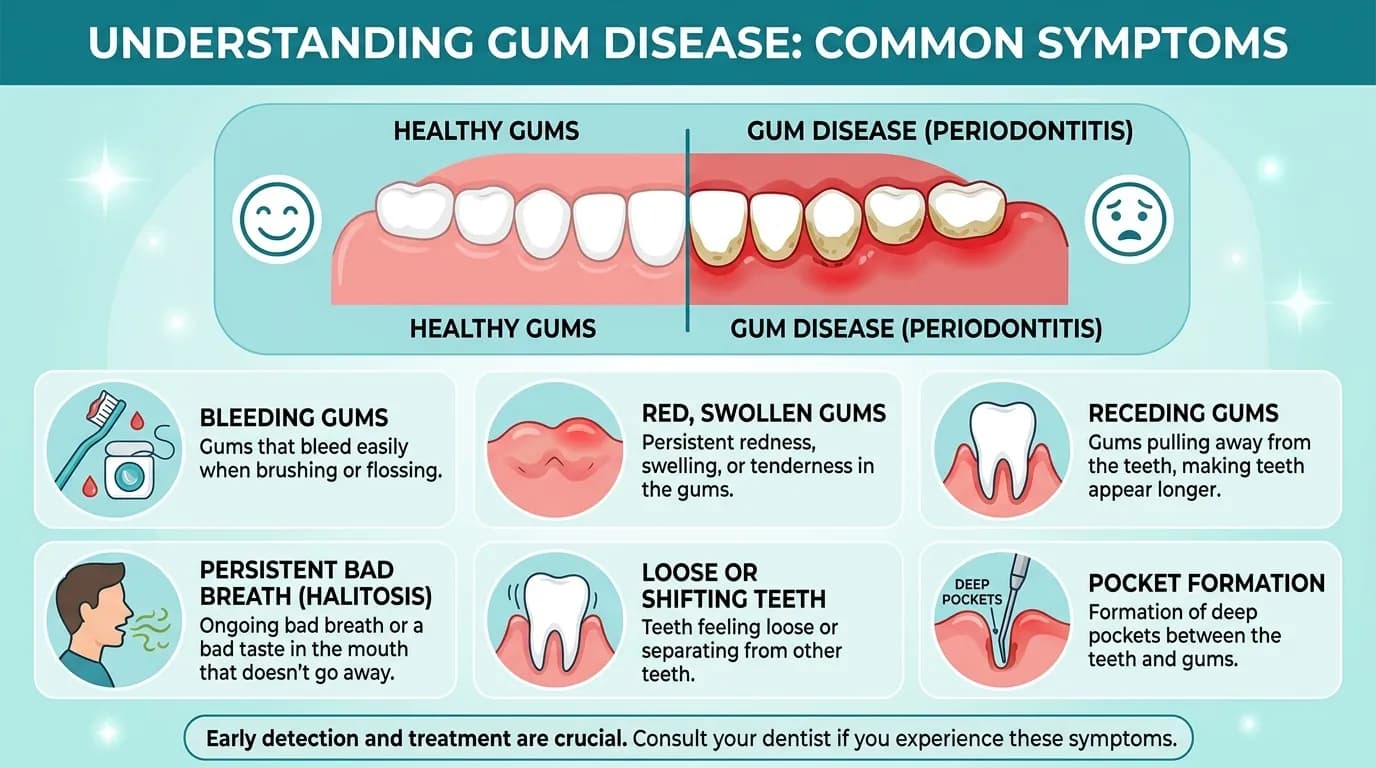
Gum disease is a spectrum. The early stage is often called gingivitis (inflammation of the gums). If it progresses, it can become periodontitis, where the supporting structures around teeth are affected.
The key idea: early issues are easier to reverse. Later issues are more about management.
Early Signs of Gum Disease (What People Commonly Miss)
The tricky part about gum disease is that it can feel “not serious”… until it is.
Common early signs:
- Bleeding when brushing or flossing (even small amounts)
- Redness instead of healthy pink gums
- Puffiness or gums that look “inflated”
- Tenderness along the gumline
- Bad breath that returns quickly after brushing
- Bad taste or a feeling that your mouth never feels clean
Bleeding Gums Causes: The Most Likely Reasons
Bleeding is a symptom, not a diagnosis. Here are typical causes.
1) Plaque and inflammation (the most common)
Plaque is sticky bacterial buildup. If it sits at the gumline, your gums can become inflamed and bleed more easily.
2) Brushing too hard or using a rough toothbrush
Hard brushing can irritate gums and cause bleeding even in people without gum disease. The fix is usually technique and a soft-bristle brush, not more force.
3) Flossing after a long break
If you start flossing after a long time, gums can bleed at first. If the bleeding improves within 1–2 weeks of gentle, consistent hygiene, that is a good sign. If it does not, that points toward inflammation that needs professional care.
4) Hormones, medications, and health conditions
Pregnancy, certain medications, and some systemic conditions can affect gum tissue. A dentist can help assess what is normal vs. what needs treatment.
Swollen Gum Around Tooth: When It Is Localized
A swollen gum around tooth often means the issue is localized—one area is reacting.
Common possibilities include trapped food, irritation from a rough edge of a filling/crown, an early gum infection, or issues around a partially erupted wisdom tooth.
If swelling is painful, increasing, or associated with a bad taste, consider it urgent and get evaluated.
How to Treat Gum Disease at Home (What Helps vs. What is Hype)
People search how to treat gum disease at home because they want to fix it quickly. At-home steps can reduce inflammation and support healing, but they do not remove hardened tartar below the gumline.
Helpful steps you can start today:
- Brush gently twice daily with a soft brush and attention to the gumline.
- Floss daily (slowly, gently; do not “snap” floss)
- Salt-water rinse for short-term comfort
- Clean between teeth with interdental brushes if floss is hard for you
- Stop smoking (if applicable) — it strongly impacts gum healing
What to avoid:
- Harsh scraping tools at home that can injure gums
- Overusing strong mouthwashes that irritate tissue
- Ignoring consistent bleeding for weeks
When to See a Dentist for Bleeding Gums
A dentist for bleeding gums is worth booking when:
- Bleeding lasts longer than 1–2 weeks despite gentle hygiene
- You have gum swelling, bad taste, or gum recession
- You notice loose teeth or changes in your bite
- You have pain that wakes you up or swelling that spreads
Use a 3D Mouth Model to Describe Gum Symptoms More Clearly
One reason gum issues linger is that people cannot describe them well: “my gums feel weird” does not help you (or your dentist) narrow it down.
DentalShelter’s 3D mouth model lets you tap the gum area, note where the bleeding or swelling occurs, and describe what you see. That summary is useful in the chair and helps the appointment move faster.
Related DentalShelter Resources
- If you’re also dealing with tooth pain, read: Tooth Pain but No Idea What's Wrong? This 3D Mouth Tool Helps You Figure It Out Before Seeing a Dentist
- If you want to understand digital symptom checkers, read: What Is a Dental Diagnosis Tool? How to Check Oral Problems Online
Use DentalShelter's 3D mouth model to tap on the gum area and describe your symptoms, then bring that summary to your dentist.
Frequently Asked Questions
What are the most common gum disease symptoms?
Common gum disease symptoms include bleeding when brushing or flossing, red or swollen gums, tenderness, persistent bad breath, and gum recession. Early signs often feel mild, which is why they are easy to ignore.
What causes bleeding gums?
Bleeding gums causes include plaque-related inflammation, brushing too hard, flossing after a long break, hormonal changes, medications, and some health conditions. If bleeding persists for more than 1–2 weeks, see a dentist.
How do I treat gum disease at home?
You can support gum healing with gentle brushing, daily flossing, interdental cleaning, and salt-water rinses. These steps help reduce inflammation, but professional cleaning is often needed to remove tartar below the gumline.
Is a swollen gum around a tooth always gum disease?
Not always. A swollen gum around tooth can be caused by trapped food, irritation from dental work, or a localized infection. Because it can worsen quickly, it is smart to get it evaluated if pain or swelling is increasing.
When should I see a dentist for bleeding gums?
If bleeding is frequent, lasts longer than 1–2 weeks, or comes with swelling, recession, bad taste, or loose teeth, book a visit with a dentist for bleeding gums.